





We use cookies to provide you with better user experience. Cookies settings can be controlled and configured in your web browser at any time.
By using the site you agree to us using cookies and also read privacy policy. To continue viewing and using the website click on “Continue”.
27
May 2026
Blog
Commercial vs Industrial Display: What’s the Difference?
When comparing industrial vs commercial display options, many buyers first look at screen size, brightness, and price. However, the real difference is not only in visual performance. Industrial displays are designed for more demanding environments, longer operating hours, and higher reliability requirements.
A commercial display may be suitable for offices, meeting rooms, indoor retail spaces, or general digital signage. An industrial grade monitor, on the other hand, is designed for applications such as factory automation, transportation systems, outdoor kiosks, control rooms, gaming machines, military systems, and embedded equipment.
If the display is part of a mission-critical system, the lower upfront cost of a commercial display may not justify the risk of downtime, poor readability, or shorter service life.
Core Differences Between Commercial and Industrial Displays
| Comparison Item | Commercial Display | Industrial Display |
|---|---|---|
| Operating hours | General daily use | Long-hour or continuous operation |
| Brightness | Usually indoor brightness | Higher brightness options, including sunlight readable |
| Backlight lifetime | Shorter lifecycle | Longer MTBF options |
| Environment | Office, retail, indoor public spaces | Factory, kiosk, transportation, outdoor, harsh environments |
| Integration | Standard installation | Embedded, open frame, VESA, industrial system integration |
| Reliability | Consumer or commercial-grade | Industrial-grade components and design |
| Product lifecycle | May change frequently | Better for long-term project planning |
What Does Industrial Grade Mean?
An industrial-grade display is built for reliability, stability, and integration in professional environments. It usually includes stronger design considerations for brightness, thermal performance, mounting, backlight lifetime, and long-term operation.
For example, in industrial display projects, buyers often evaluate:
- Brightness level
- Backlight MTBF
- Operating temperature
- Input interface
- Mounting method
- Panel durability
- Power consumption
- Viewing angle
- Long-term availability
- Application environment
The goal is not only to show images. The goal is to support reliable visual communication in environments where failure can affect operation, safety, service quality, or customer experience.
What Does MTBF 100K Hours Mean?
MTBF stands for Mean Time Between Failures.
In display specifications, backlight MTBF helps buyers estimate the expected reliability of the backlight system under defined conditions.
A higher MTBF value is especially important for applications that require long operating hours. For example, the Litemax DPF5501-LNN and 4904-L both list 100,000-hour backlight MTBF, making them suitable for long-hour industrial and commercial display projects.
Why MTBF Matters
In comparison, many commercial-grade LCD displays are not designed for the same level of continuous operation. Litemax also explains that commercial-grade LCD displays may not provide sufficient MTBF for applications requiring around-the-clock operation.
5 Scenarios Where You Should Choose an Industrial Display
1
The Display Operates for Long Hours
If the display is used more than typical office hours, industrial-grade reliability becomes important. This includes 24/7 signage, factory control systems, transportation displays, and self-service kiosks.
2
The Display Is Installed in a Bright Environment
Commercial displays may become difficult to read under strong ambient light. Industrial displays offer high brightness or sunlight readable options for outdoor and semi-outdoor applications.
3
The Display Is Part of a Machine or Embedded System
Machine builders and system integrators often need displays that can be embedded into equipment. Mounting, dimensions, input interface, and thermal design must be considered.
4
Downtime Creates Operational Risk
If a display failure affects production, customer service, ticketing, transportation information, or field operation, an industrial display is usually the safer choice.
5
The Project Requires Long-Term Availability
Industrial projects often need consistent hardware availability for maintenance, repeat orders, and system expansion. Commercial displays may change models frequently, making long-term project support more difficult.
Litemax Industrial Display Quality Advantages
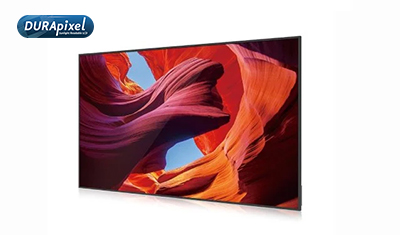
Litemax focuses on sunlight readable, high brightness industrial displays, resizing, customization, industrial computing, digital signage applications, and embedded computing platforms. Its industrial display product lines support applications such as kiosks, transportation, factory automation, gaming, outdoor signage, and harsh environments.
For buyers comparing commercial and industrial displays, Litemax provides different brightness and reliability levels to match different project requirements. For example:
DPF5501-LNN
55-inch, 4000 nits
Sunlight readable, 100,000-hour backlight MTBF
4904-L
49-inch, 700 nits
4K resolution, 100,000-hour backlight MTBF
4903-L
49-inch, 500 nits
4K resolution, 30,000-hour backlight MTBF
Conclusion
The difference between commercial and industrial displays is not only price. It is about reliability, operating environment, lifecycle, integration, and long-term performance.
If your display is used in an office or indoor meeting room, a commercial display may be enough. But if your project involves factory automation, outdoor kiosks, transportation systems, digital signage, or machine integration, an industrial-grade monitor is usually the better choice.