





We use cookies to provide you with better user experience. Cookies settings can be controlled and configured in your web browser at any time.
By using the site you agree to us using cookies and also read privacy policy. To continue viewing and using the website click on “Continue”.
27
May 2026
Blog
How to Choose an Industrial Display for Factory Automation
Factory automation environments require displays that are more durable, stable, and integration-ready than standard commercial monitors. In modern production lines, displays are no longer used only for showing basic information. They are part of HMI systems, machine control panels, AGV systems, production dashboards, inspection stations, and industrial monitoring platforms.
Choosing the right industrial display for factory automation can improve operator efficiency, reduce downtime risk, and support long-term system reliability. Instead of selecting a display based only on size or price, buyers should evaluate brightness, resolution, backlight lifetime, mounting flexibility, thermal performance, and application environment.
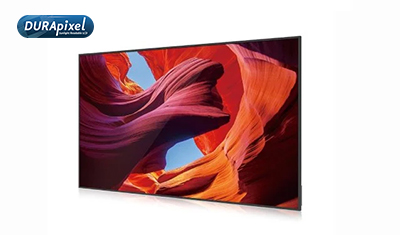
This industrial monitor selection guide explains the key factors to consider and compares three Litemax industrial display options: DPF5501-LNN, 4904-L, and 4903-L.
Key Display Requirements in Factory Automation
Factory environments are different from office or retail spaces. Displays may be installed near machines, production lines, control cabinets, robotic systems, or industrial equipment. The operating environment may involve dust, vibration, heat, long working hours, and continuous monitoring requirements.
Common factory automation display requirements include:
- Stable long-hour operation
- Readable content under bright factory lighting
- Industrial-grade backlight reliability
- Wide viewing angle for operators
- High resolution for detailed data visualization
- Flexible mounting for equipment integration
- Low power consumption
- Compatibility with kiosk, automation, transportation, or industrial systems
A commercial monitor may work for basic office use, but factory automation projects usually require a more robust display platform.
4 Key Factors When Choosing an Industrial Monitor
1
Brightness
Brightness affects readability. In factory environments, displays may be installed under strong lighting or near windows. A low-brightness screen may be difficult to read from a distance or under bright ambient light.
For general indoor automation environments, 500–700 nits can often provide better visibility than standard commercial displays. For outdoor or high ambient light industrial applications, a sunlight readable display with 2500–4000 nits may be required.
2
Resolution
Resolution determines how much detail the display can show. For control rooms, production dashboards, and monitoring systems, 4K resolution can provide more space for charts, status panels, camera feeds, and operational data.
For example, Litemax 4904-L and 4903-L both provide 3840 × 2160 resolution, making them suitable for factory dashboards, control rooms, and detailed visual interfaces.
3
Backlight Lifetime and MTBF
Factory automation displays may operate continuously for long shifts or 24/7 production schedules. Backlight MTBF is an important reliability indicator when planning long-term system maintenance.
The Litemax DPF5501-LNN and 4904-L both support 100,000-hour backlight MTBF, while 4903-L supports 30,000-hour backlight MTBF.
4
Mounting and Integration
Industrial displays are often embedded into machines, control panels, kiosks, or production equipment. Buyers should consider display dimensions, bezel design, input interface, VESA mounting, housing options, and system integration requirements.
Product Comparison: DPF5501-LNN vs 4904-L vs 4903-L
| Model | Size | Brightness | Resolution | Backlight MTBF | Recommended Use |
|---|---|---|---|---|---|
| DPF5501-LNN | 55" | 4000 nits | 1920 × 1080 | 100,000 hours | Outdoor kiosk, high ambient light, transportation, outdoor industrial display |
| 4904-L | 49" | 700 nits | 3840 × 2160 | 100,000 hours | Factory automation, control room, high-resolution industrial display |
| 4903-L | 49" | 500 nits | 3840 × 2160 | 30,000 hours | Indoor kiosk, machine display, automation interface, cost-conscious applications |
Scenario Recommendations
AGV and Material Handling Systems
AGV and Material Handling Systems
AGV systems and material handling equipment often require displays for route information, operational status, warning messages, and maintenance interfaces. If the display is installed indoors, a 500–700 nits industrial LCD can be suitable.
Recommended models:
- 4903-L for indoor AGV status display or machine interface
- 4904-L for higher brightness and longer backlight lifetime
- DPF5501-LNN for high ambient light or outdoor logistics environments
Factory Control Room
Factory Control Room
Control rooms often need large displays with high resolution. Operators may monitor production data, equipment status, alarms, and surveillance feeds. In this case, resolution and long-term reliability are especially important.
Recommended model:
4904-L, because it combines 49-inch screen size, 700 nits brightness, 3840 × 2160 resolution, slim bezel design, and 100,000-hour backlight MTBF.
Machine Display and HMI Integration
Machine Display and HMI Integration
For machine-side displays, readability, size, input compatibility, mounting, and power consumption matter. If the display is installed indoors and does not require extreme brightness, 4903-L can be a practical option.
Recommended model:
- 4903-L for indoor machine display and automation interface
- 4904-L for higher brightness and stronger long-hour reliability
Outdoor or High Ambient Light Industrial Display
Outdoor or High Ambient Light Industrial Display
For industrial projects installed near outdoor areas, loading docks, transportation hubs, or bright public spaces, standard brightness may not be enough.
Recommended model:
DPF5501-LNN, because its 4000 nits brightness and sunlight readable design make it suitable for outdoor and high ambient light applications.
Why Choose Litemax Industrial Displays?
Litemax provides industrial-grade display solutions for applications such as factory automation, kiosks, transportation, gaming, digital signage, and harsh environments. For factory automation buyers, the key benefit is not only the display specification itself, but also the ability to select the right display platform based on real application needs.
A good industrial display should help system integrators and equipment manufacturers build reliable, readable, and maintainable systems.
When choosing an industrial display for factory automation, start by defining the installation environment. If the display is used indoors for general machine interfaces, brightness around 500 nits may be sufficient. If the display is used in a control room or high-resolution dashboard, 4K resolution and long backlight lifetime become more important. If the display must operate in high ambient light or outdoor conditions, a sunlight readable display such as the DPF5501-LNN should be considered.