





We use cookies to provide you with better user experience. Cookies settings can be controlled and configured in your web browser at any time.
By using the site you agree to us using cookies and also read privacy policy. To continue viewing and using the website click on “Continue”.
01
Aug 2026
Blog
Sunlight Readable vs Standard Displays: What Actually Changes Outdoors?
Move an office display outdoors and the problem is rarely just that the picture looks a little dim. At noon, reflections can turn the front glass into a mirror. In summer, the temperature inside a sealed enclosure can climb high enough to cause LCD blackening or shorten backlight life. For a ticketing kiosk, EV charger, transit sign or industrial HMI, that is a functional failure.
That is why the difference between a standard display and a sunlight-readable display cannot be reduced to one nit value. Outdoor usability depends on brightness, reflection control, optical bonding, thermal design and lifetime engineering working together.
Quick answer: when do you need a sunlight-readable display?
Use one whenever the screen will face direct sun, strong daylight through glazing, intense retail lighting or long-term outdoor exposure. Standard displays are designed for controlled indoor lighting. Sunlight-readable displays are engineered to preserve contrast, control heat and operate reliably across a wider environmental range.
| Attribute | Standard display | Sunlight-readable display |
|---|---|---|
| Typical brightness | About 250–350 nits | Starts around 1,000 nits; selected Litemax models reach 4,500 nits |
| Optical stack | Often includes an air gap | Can use optical bonding to reduce internal reflections |
| Solar heat | Usually not designed for it | UV/IR treatment, heat sinking and active control can be integrated |
| Backlight life | Often based on shorter commercial duty | Selected Durapixel products specify 100,000-hour MTBF |
| Typical use | Office, indoor POS | Outdoor kiosk, transit sign, EV charger, industrial equipment |
Start with the real light environment
“Outdoor” is not a complete specification. A north-facing kiosk under a canopy and a west-facing sign that receives direct afternoon sun may sit only a few metres apart, but their display requirements are very different. Use the following ranges as a starting point, then add headroom for small text, viewing distance and cover-glass losses.
More brightness is not automatically better. Without automatic dimming, the display may be uncomfortable at night. Without upgraded thermal design, the extra backlight power simply creates more heat. Define the worst lighting condition first, then specify brightness, sensing and cooling as one system.
Outdoor readability is also a reflection problem
A conventional assembly often leaves an air gap between the cover glass and the LCD. Every glass-to-air boundary reflects light, creating a pale haze over the image. Optical bonding fills that gap with an optically clear material so the cover glass, touch layer and LCD behave more like one optical stack.
Litemax describes AOT, or Advanced Optical Bonding, as a patented method for reducing reflective surfaces. The result is higher effective contrast in strong ambient light. For text-heavy ticketing, passenger information and HMI screens, reducing reflection can be more valuable than simply adding more backlight output. Bonding also removes the air volume where internal condensation can form and creates a stronger laminated structure.
01
Higher effective contrast
Fewer glass-to-air boundaries mean less veiling reflection in strong ambient light.
02
No internal condensation
Removing the air volume removes the space where moisture can collect and fog the display.
03
Stronger laminated structure
The bonded stack behaves as one unit and resists impact better than an air-gap assembly.
Sunlight adds heat as well as light
An outdoor display receives heat from two directions: the high-brightness backlight warms the enclosure from inside, while solar loading warms the glass and housing from outside. Weather-app air temperature is therefore not the number that matters most. The internal enclosure temperature is.
What to confirm before freezing the design
- Operating temperature range of the panel, not of the surrounding air.
- Blackening resistance under sustained high internal temperature.
- Airflow, heat sinking and any active heating or cooling in the enclosure.
- Backlight MTBF against the real duty cycle — selected Litemax Durapixel models specify 100,000 hours.
Litemax Durapixel covers a range of high-brightness and wide-temperature products. Always confirm the exact product datasheet before freezing the design.
Five questions that prevent an expensive mismatch
1
What is the peak ambient light, and can the sun fall directly on the glass?
2
Is the content large-format advertising or small, time-critical text such as fares and alarms?
3
Are the cover glass, touch sensor and LCD fully optically bonded?
4
Do the IP, IK and temperature ratings apply to the front only or to the complete unit?
5
Do backlight life, 24/7 duty and product longevity match the project lifecycle?
Frequently asked questions
Is a high-brightness display the same as a sunlight-readable display?
Not exactly. High brightness describes backlight output. Sunlight readability is the outcome of brightness, optical bonding, surface treatment, thermal design and dimming working together.
How many nits are needed in direct sunlight?
Begin the discussion at 2,000 nits or above, but do not specify brightness alone. A bonded display with controlled reflections can outperform a brighter unbonded panel.
Will an outdoor display be too bright at night?
It should not be. An ambient-light sensor and a tuned dimming curve can lower output automatically for night-time operation.
Can a commercial TV be installed inside an outdoor enclosure?
It may fit, but its optical stack, operating temperature, duty cycle and thermal assumptions are usually wrong for a sealed outdoor system.
How Litemax supports outdoor display projects
The fastest way to narrow the specification is to share the installation direction, sun exposure, viewing distance, content, temperature range and enclosure constraints together. Litemax can then combine Durapixel high-brightness displays, optical bonding, brightness customization and thermal-control options around the real deployment rather than a single headline number.
Talk to a Litemax display engineerReferences / internal links: Litemax Sunlight Readable Technology • Litemax Durapixel Series • Litemax 75-inch 4,500-nit Display
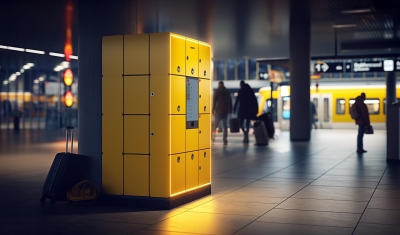
Application illustration | Confirm final appearance and specifications on the Litemax product page and datasheet.